Simulcasting game icon

Horse Racing

Simulcasting Casinos

Your comprehensive guide to simulcast racing — how to bet on horse and dog races broadcast live from tracks around the country.

82 US venues offer simulcasting.

House Edge
15–25% takeout (varies by track and bet type)
RTP
75–85%
Typical Min Bet
$2
Pace
Race-driven (races every 5–30 minutes)
Category
Horse Racing
Beginner-friendly

Casino Directory

Where to play Simulcasting in the US

Showing 12 of 82 venues

Simulcasting is the live broadcast of horse and greyhound races from tracks across the country — and around the world — to a wagering venue where you can bet on those races in real time. It is the engine that powers racebooks and race and sports books at 82 US casinos, letting you bet on a race at Churchill Downs, Gulfstream Park, or Santa Anita without leaving your local casino. This guide explains how simulcasting works, how to read a racing program, and how to find simulcast horse racing near you. You'll find live tables at most major properties. See our full US casino directory for venue contact details and hours.

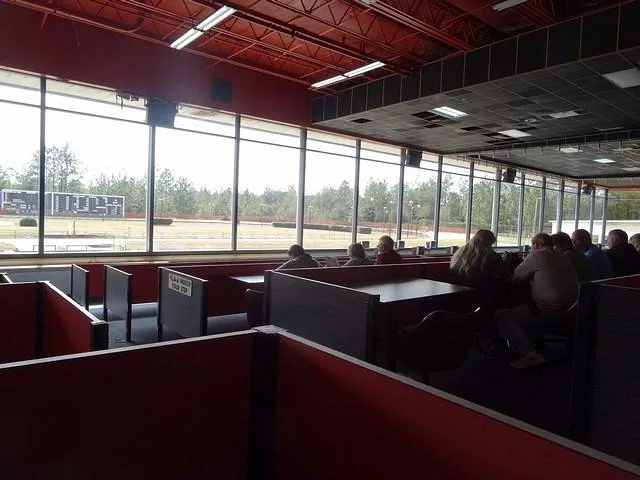
Simulcasting transformed the horse racing industry by letting bettors at one location wager on races happening hundreds or thousands of miles away. Today, a typical casino racebook simulcasts races from 10 to 20 tracks daily, with feeds from premier venues like Churchill Downs, Saratoga, Del Mar, and Gulfstream Park. At 82 US casinos offering simulcast wagering, you can spend an afternoon flipping between a maiden claimer at Aqueduct, a graded stakes at Keeneland, and a greyhound card at a Florida track — all from the comfort of your personal carrel. The technology is straightforward: live satellite and fiber feeds deliver high-definition video to every monitor in the venue, and the pari-mutuel pools are electronically linked so your bet goes into the same pool as every other bettor across the country. For a broader overview of race betting, see our guides to horseracing and racebook wagering.

How to play Simulcasting

  1. Find a casino or racebook with a simulcast schedule. Most race and sports books simulcast races from a dozen or more tracks daily. Check which tracks are running on the day you plan to visit.

  2. Pick up a racing program or Daily Racing Form at the counter. The program is your essential tool — it lists every horse, jockey, trainer, post position, morning-line odds, and past performance data for every race at every track being simulcast.

  3. Choose a track and race. Screens throughout the venue will show which track is running next and the countdown to post time. Pick a race that gives you enough time to study the program before betting.

  4. Select your bet type and amount. Start simple — a $2 win bet on your chosen horse — before progressing to exacta, trifecta, or multi-race wagers. Tell the teller the track name, race number, bet amount, bet type, and horse number.

  5. Watch the simulcast feed on your personal carrel screen or the main monitors. Races typically last one to two minutes. After the race is declared official, winning payouts are determined by the pari-mutuel pool.

  6. Cash your ticket at the window or kiosk. You have a limited time (typically 30–90 days from the race date) to redeem winning tickets, so do not let them pile up.

Game Rules and Payouts

Simulcast wagering uses the pari-mutuel system: all bets on a given race are pooled together, the track deducts its takeout percentage, and the remaining money is divided among winning ticket holders. This means your payout is not fixed — it depends entirely on how much total money is bet on the race and how much of it is on your horse. A horse that goes off at 3-1 might pay $8.00 on a $2 win bet, but if a late surge of money comes in on that horse, the odds could drop to 2-1 and the payout to $6.00. The takeout varies by track and bet type. Straight win, place, and show bets typically see a 15–17% takeout, while exotic wagers like the exacta, trifecta, and superfecta may carry a takeout of 19–25%. Multi-race wagers such as the Pick 4 and Pick 6 are at the higher end of that range. In addition, the track you are physically at may charge a small additional fee or have a slightly different takeout rate for out-of-state tracks — something to check before you start betting heavily on a distant venue. Minimum bets are generally $2 per wager, though some venues allow $1 exacta boxes and other partial-unit exotic plays. For a more detailed look at how the pari-mutuel system compares to fixed-odds betting, see our sportsbook guide, which covers the fixed-odds side of the casino.

  • How do I read a racing program?

    Start with the horse's running lines — each line shows the date, track, distance, surface, and finishing position of a recent race. The speed figure (like a Beyer number) is the most immediately useful number: higher is faster, and a horse that consistently runs figures in the 80s and 90s is competitive at most tracks. Check the jockey and trainer win percentages, the post position (certain post positions win at higher rates at certain distances), and the morning-line odds as a rough guide to public expectation. It looks dense at first, but after a few races you will learn to scan it in 60 seconds.

Editorial Strategy

Strategy & etiquette for Simulcasting

  • Learn to read a program before you bet real money. Understanding speed figures, class levels, jockey and trainer win percentages, and post-position statistics gives you a meaningful edge over casual bettors.

  • Focus on one or two tracks per session. Each track has its own surface quirks, distance biases, and trainer colony — spreading yourself across eight tracks dilutes whatever edge you may have.

  • Compare takeout rates. Different tracks and bet types carry different takeout percentages. Straight bets like win, place, and show generally have lower takeout (15–17%) than exotic wagers like the Pick 6 (up to 25%).

  • Watch the tote board for late money. Significant odds shifts in the final minutes before post time can indicate informed betting action — sharp money often arrives late.

  • Start with win betting and work your way up to exotics. A single $2 win bet is the lowest-risk entry point. As you gain confidence reading the program, gradually add exacta and trifecta boxes to your repertoire.

  • Use a separate voucher or ticket system to track your net result. It is easy to lose track of wins and losses across multiple races and tracks. Cashing one winning ticket at a time helps you stay disciplined.

Where to play in the US

Top land-based casinos to play Simulcasting

Editorial picks for visitors who want a real-floor Simulcasting session. Ranked by directory depth (table counts, amenities, and floor quality). Tap any card for the full property review.

  1. #1Casinos
    Editor's pick
    The Venetian — paradise

    The Venetian

    Paradise, Nevada

    1,247 slots · 159 tables · 37 poker tables · 24/7

    Selection100
    Value56
    Experience100

    Games available

    • Baccarat
    • Big 6
    • Blackjack

    Property

    • Open 24 7
    • Self Parking
    • Valet
    Rate for Simulcasting0 votes

    Your vote is saved to this browser only.

  2. #2Casinos
    WinStar World Casino — thackerville

    WinStar World Casino

    Thackerville, Oklahoma

    7,400 slots · 88 tables · 46 poker tables · 24/7

    Selection100
    Value95
    Experience100

    Games available

    • 3 Card Poker
    • Bingo
    • Blackjack

    Property

    • Bar
    • Golf
    • Grill
    Rate for Simulcasting0 votes

    Your vote is saved to this browser only.

  3. #3Racinos
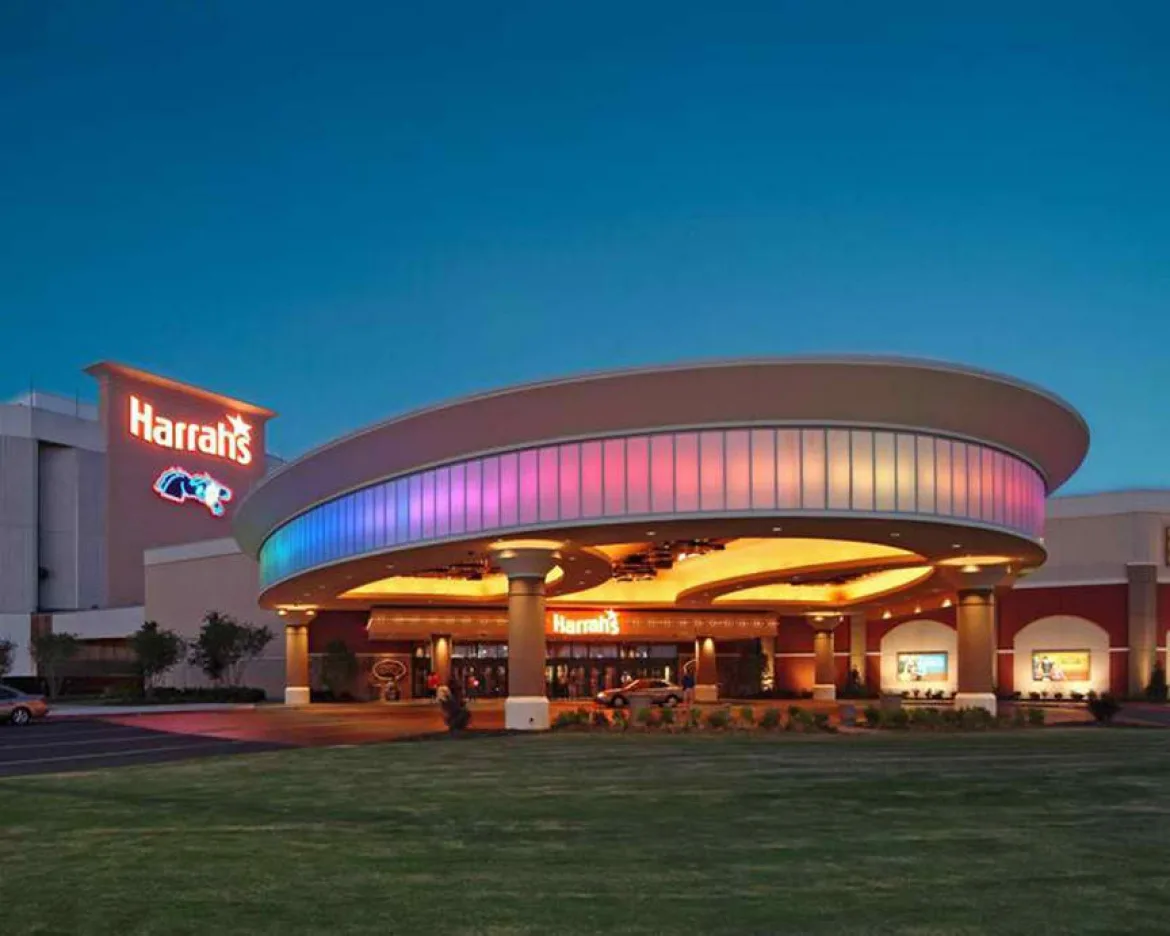
    Harrah’s Philadelphia — chester pennsylvania

    Harrah’s Philadelphia

    Chester Pennsylvania, Pennsylvania

    2,090 slots · 126 tables · 28 poker tables · 24/7

    Selection100
    Value57
    Experience100

    Games available

    • 213
    • 3 Card Poker
    • Asia Poker

    Property

    • Open 24 7
    • Restaurant
    • Self Parking
    Rate for Simulcasting0 votes

    Your vote is saved to this browser only.

Rankings reflect directory data depth (floor counts, game variety, amenity tags) re-verified quarterly. They are not a substitute for current operating status; confirm hours and game spread directly with each casino before visiting.

Game Strategy

Successful simulcast betting starts with the program. The Daily Racing Form or the track's own program provides speed figures (like Beyer or Equibase numbers), running lines showing a horse's recent performances, and key data about class, distance, surface, and connections. Spend at least five minutes per race you intend to bet — look for horses dropping in class, horses with strong late-pace figures in races where the early pace projects to be fast, and jockey-trainer combinations that win at a high percentage. When comparing tracks, consider takeout rates: a bet at a track with a 15% takeout returns more to winners over the long run than one at 25%. Also, focus on tracks where you know the circuit — following one track's meet closely over several weeks builds an intuition that no single-day program study can replicate. Avoid spreading yourself too thin across too many tracks in a single session. And remember that exotic wagers, while offering headline-grabbing payouts, carry a higher takeout and are harder to hit. A disciplined bettor wins more with straight win and place bets than with four-horse trifecta boxes. For more on the pari-mutuel system and wager types, see our horseracing guide.

Common Simulcasting variants

  • Thoroughbred Simulcasting

    Live broadcasts of thoroughbred flat races from major tracks. The most common and widely available simulcast product, covering tracks like Churchill Downs, Gulfstream, and Santa Anita.

  • Harness Racing Simulcasting

    Standardbred horses pulling sulkies in trotting and pacing races. Feeds from tracks like the Meadowlands, Yonkers, and Northfield Park.

  • Greyhound Simulcasting

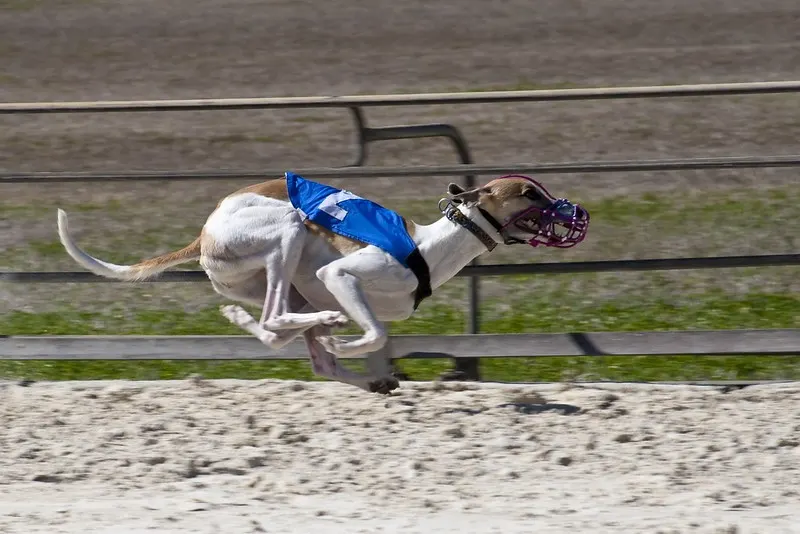
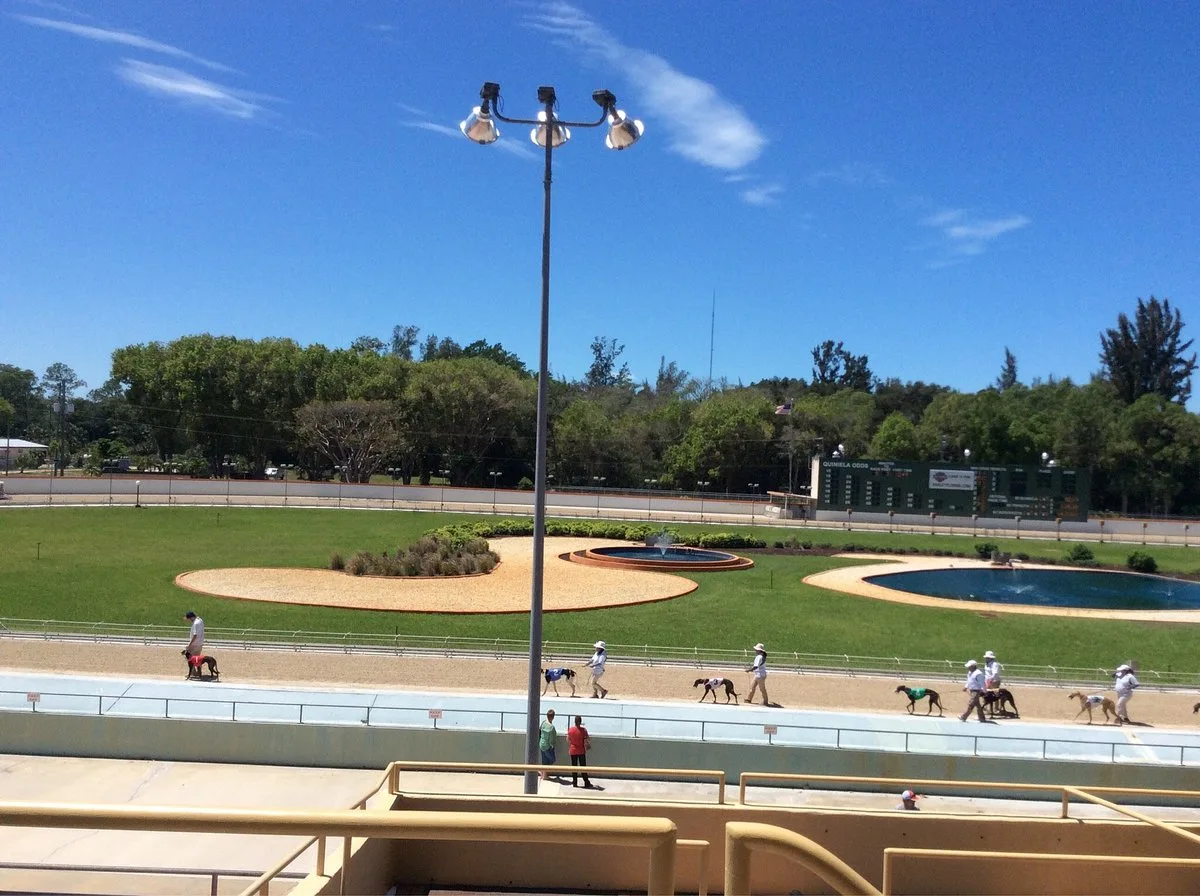
    Live broadcasts of greyhound races from dog tracks. Less common as the sport has contracted, but still available at many racebooks.

  • International Simulcasting

    Feeds from overseas tracks — Royal Ascot, Longchamp, the Dubai World Cup, and major Australian and Hong Kong race meetings — available at larger racebooks, often with separate pool structures.

Where to Play

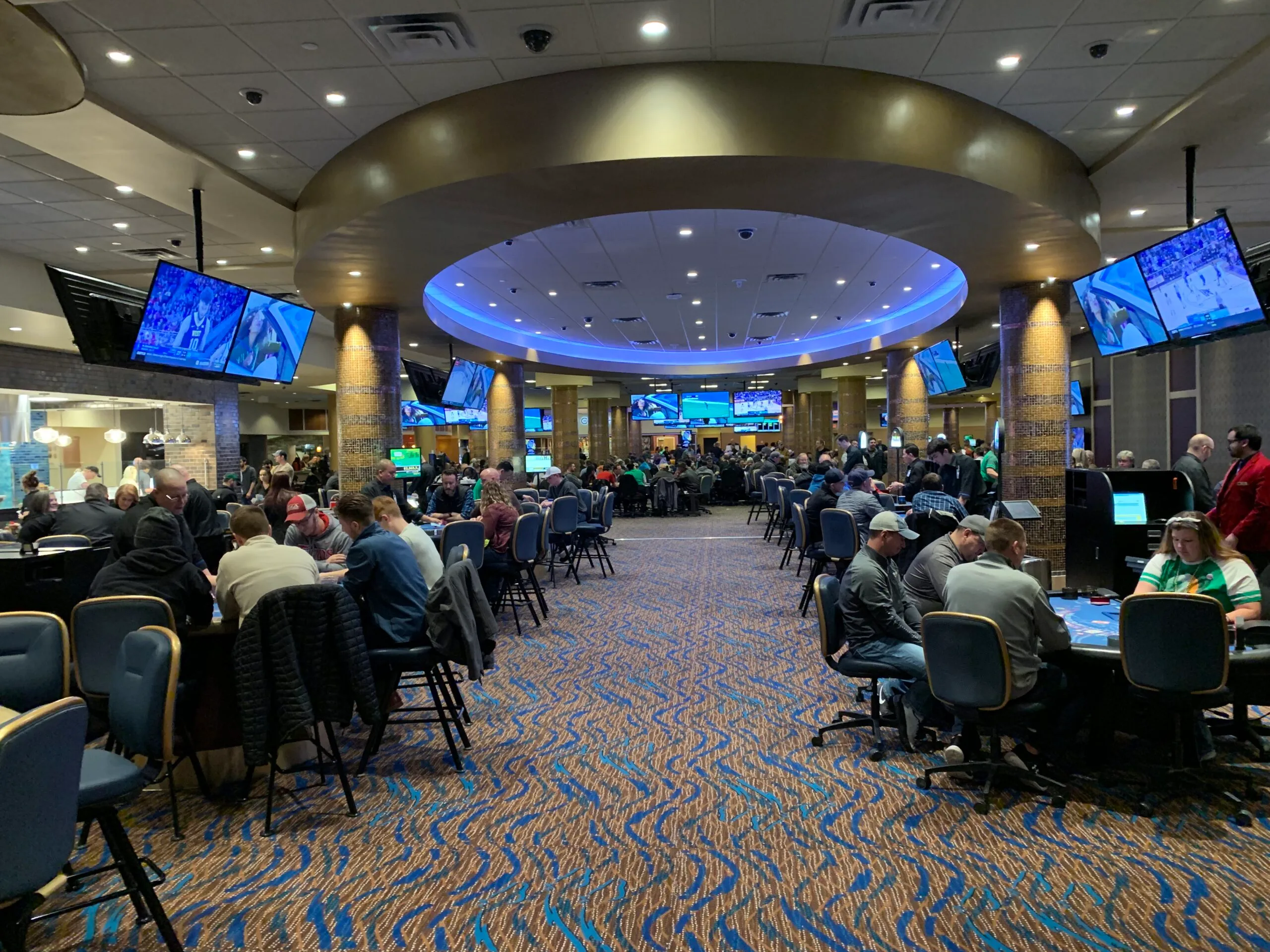
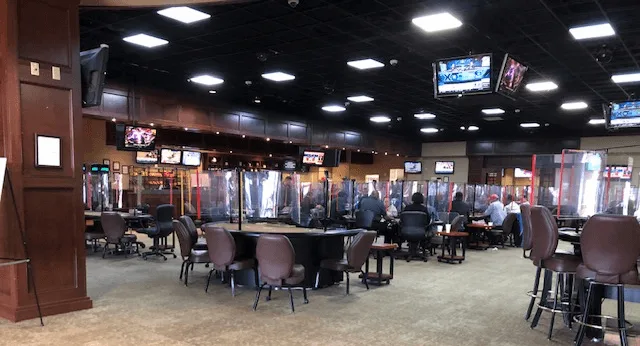
Simulcasting is available at 82 casino racebooks and race and sports books across the United States, concentrated in states with active horse racing industries such as Nevada, Kentucky, New York, Florida, California, Arkansas, and Louisiana. The best simulcast venues offer dozens of personal carrels with individual monitors, multiple large screens showing live track feeds and tote-board data, and full food and beverage service so you can make a day of it. Some venues, particularly in Las Vegas, open as early as 8 a.m. to catch East Coast tracks and stay open through the final West Coast race. When choosing a venue, ask about their daily track lineup — the best rooms carry feeds from all major thoroughbred tracks plus harness racing and greyhounds. Use our US casino directory to find simulcast horse racing near you. If you prefer a smaller venue dedicated exclusively to racing, explore off-track betting locations as well.

  • What is the difference between simulcasting and live racing?

    Live racing means the horses are physically running at the track you are at. Simulcasting means you are watching and betting on a live broadcast of races happening at a different track — often hundreds of miles away. From a betting perspective, the process is identical: your bet goes into the same pari-mutuel pool regardless of where you place it.

Search