DJ Wild is the rare novelty table game that’s actually a decent bet. The combined edge runs 1.73%, near baccarat and well under the older stud games. The strategy is one rule. And five wild cards in the deck mean monster hands show up often enough to keep the table loud. For a game most players have never heard of, that’s a strong hand to be dealt.
It isn’t perfect. The BlindA second mandatory wager, equal to your Ante, that you post before any cards are dealt. In DJ Wild it stays in play whether you fold or raise, and it only earns a bonus when you beat the dealer with a straight or better — paying up to 1,000:1 if you land all five wild cards. is mandatory, so you can’t sit in cheap on the Ante alone; your forced exposure is doubled from the first card. No dealer qualifier cuts both ways, too. It kills the Caribbean Stud frustration of a pushed raise, but it also means there’s no soft landing when the dealer comes in weak. And good luck finding a table, which we’ll get to. Think of it as a faster, friendlier cousin to Ultimate Texas Hold ‘Em: fewer decisions, more wild-card drama, slightly higher edge.
Where it came from
DJ Wild is a Geoff Hall design, which tells you something before you sit down. Hall is one of the most prolific table-game inventors working, and his other credits include Free Bet Blackjack and Blackjack Switch. He builds games that look gimmicky and turn out mathematically sound.
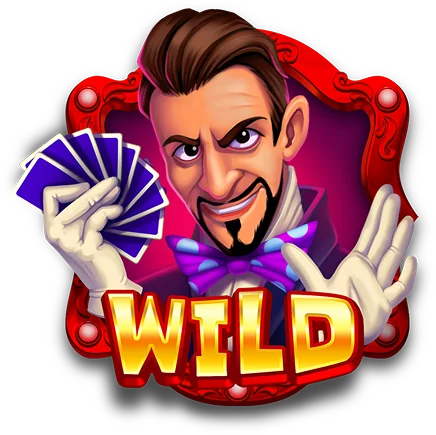
ShuffleMaster unveiled it at the 2014 Global Gaming Expo, and the Wizard of Odds spotted the first live table at New York-New York in April 2015 before it rolled out to Detroit, Cleveland, and a scatter of California card rooms. The name is the giveaway once you know it. “DJ” is Deuces and Joker, the five wilds that define the game, nothing to do with turntables despite the logo. Hall pitched it as a quicker stable-mate to Ultimate Texas Hold ‘Em, and that’s still the clearest way to place it.
The strategy is basically one rule
Most table games make you memorize a chart. This one fits on a cocktail napkin. Run a hand through the trainer and you’ll see how rarely you fold.
Editor's tool
Play or fold? It's almost one rule
DJ Wild has the simplest correct strategy of any table-poker game. Pick your hand and watch how rarely you should fold.
A bare pair of 4s is the one hand where a single card changes the answer.
Pick your hand to see the play.
Raise a pair of 4s or better and you’ve made the correct play almost every time. The lone wrinkle is a bare pair of 4s with an odd 3 in the hand, which flips to a fold, because that 3 quietly lowers the odds the dealer pairs threes and shaves your edge below the line. The threshold sits this low for one reason: deuces are wild and rank above threes, so your fours are already favored against the dealer’s most common pairs. No qualifier means the dealer always plays, which removes the pushed-raise sting that dogs Caribbean Stud Poker. Every hand is a clean fight.
The edge, and what a night costs
The number you’ll see quoted is 3.47%, the edge on your Ante alone. The honest figure is lower. Because you also post the Blind and raise about 73% of hands, the edge across your combined required action is 1.73%, and against everything you put at risk (the element of risk) it’s roughly 1.29%. That’s baccarat territory, which almost no novelty poke game can claim.
Editor's tool
What will a session cost you?
A rough budget at the 1.73% combined edge. Required action is Ante plus Blind, so set the per-bet minimum (you post both).
Expected loss only, with the simple raise rule and no side bets. Real sessions swing hard around this number, especially with the 1,000:1 Blind hand in the mix. Trips and Two-Way Bad Beat add their own cost (roughly 6% to 12% of whatever you stake on them).
The forced Blind is the catch hiding in those friendly numbers. You’re committing two bets before you’ve seen a card, so a $5 game is really a $10 game. Plan a bankroll of 30 to 40 times your Ante, more if you can’t resist the side bets.
Reading the Blind bonus
The Blind only pays when you beat the dealer with a straight or better. Anything less and it simply wins even money with the Ante. Here’s the standard felt:
Hand
Blind pays
Five Wilds (joker + four deuces)
1,000:1
Royal Flush (natural)
50:1
Five of a Kind
10:1
Straight Flush
9:1
Four of a Kind
4:1
Full House
3:1
Flush
2:1
Straight
1:1
Three of a kind or less
Push on the Blind
Five Wilds is the headline. It’s hit live in regional rooms a handful of times since 2015, turning modest Blind bets into $5,000 to $10,000 paydays. At about one in three million hands, though, it’s a story you hope to tell, not a number to plan around.
The side bets, including one that pays when you lose
Two optional bets sit beside the required action, and they behave very differently. Trips pays purely on your own hand, three of a kind or better, whether you play or fold, with bigger returns for naturals that use no wild. The math is steep at about 6.16% on the common pay table.
The Two-Way Bad Beat is the oddity, and it’s a clever recruiting hook. It pays when both you and the dealer make three of a kind or better and the hands don’t tie, and the payout is keyed to the losing hand. So getting beaten with a monster is exactly when this bet rewards you, which is a feeling no other game on the floor offers. The edge still runs 7% to 12%, but the appeal isn’t the math; it’s the consolation prize on a brutal beat.
How it compares
DJ Wild lands in a sweet spot among the one-versus-dealer games. Measured by element of risk:
Game
Element of risk
Decisions
Dealer qualifier
Wilds
DJ Wild Poker
~1.29%
1
No
5
Ultimate Texas Hold ‘Em
~0.53%
3
No
0
Mississippi Stud
~1.37%
3
n/a
0
Three Card Poker
~2.01%
1
Yes
0
Caribbean Stud Poker
~2.56%
1
Yes
0
Only Ultimate Texas Hold ‘Em clearly beats it, and that game asks you to learn three decision points. If you want a near-baccarat edge with a single rule, DJ Wild trades a fraction of a percent for a lot less to memorize. Mississippi Stud is the closest match on price, but it spreads its decisions across three streets; DJ Wild gets you to the same place in one.
Where to find a table
This is the catch. DJ Wild never broke through to Strip prominence the way Ultimate Texas Hold ‘Em did, so its footprint is small and regional. In Las Vegas it turns up at Harrah’s and Flamingo, usually $5 to $10. Regional rooms carry it more reliably: Greektown in Detroit, several Ohio properties (Hard Rock Cincinnati, the Hollywood casinos, Horseshoe Cleveland), Live! in Pittsburgh and Maryland, Canterbury Park in Minnesota, and a number of Florida and California card rooms, where it sometimes runs against a designated player rather than the house. If you’re hunting one down, browse our US casino directory to see which nearby properties list their table games.
How we sourced this
The math here follows the Wizard of Odds analysis of DJ Wild (the 3.47% Ante edge, the 1.73% combined figure, the element of risk, and the pair-of-4s strategy with its lone-3 exception). Rules and side-bet pay tables are cross-checked against the official PDFs from the Massachusetts Gaming Commission and the Washington State Gambling Commission, plus house rack cards from Hard Rock Cincinnati, Hollywood Toledo, and Live! Pittsburgh. Placement and minimum notes come from the Vegas Advantage table-game survey and the Florida card-room listings. Where a side bet looks tempting, we’ve quoted its real edge rather than its top payout.