






















Choctaw Casino Resort
Durant, Oklahoma
4216 US-69, Durant, OK 74701, USA
poker
A variant name for the Emperor's Challenge Pai Gow Poker side bet, with the same Fortune-style bonus payouts and envy mechanics.
1 US venue offer emperor's challenging pai gow.
Casino Directory
Showing 1 of 1 venues
| Casino | Rating | View review |
|---|---|---|
| Not yet rated | View |
Durant, Oklahoma
4216 US-69, Durant, OK 74701, USA
Emperor's Challenging Pai Gow is an alternative name — and occasionally an alternative spelling — for the <a href='/emperors-challenge-pai-gow-poker/'>Emperor's Challenge Pai Gow Poker</a> side bet. This variant operates identically to the standard Emperor's Challenge, offering fixed-odds bonus payouts on premium seven-card hands and envy bonuses for other players at the table when a qualifying hand is made. It is available at approximately 1 casino and is primarily a branding or signage variation of the more commonly named Emperor's Challenge side bet. You'll find live tables at most major properties. See our full US casino directory for venue contact details and hours.
Emperor's Challenging Pai Gow is functionally identical to Emperor's Challenge Pai Gow Poker — the difference is in the naming and occasional signage variation across casino properties. The standard Emperor's Challenge side bet mirrors the popular Fortune Pai Gow Poker bonus structure, paying fixed odds on premium seven-card hands that range from a straight (typically 2:1) up to a seven-card natural royal flush (up to 8,000:1). What distinguishes the Emperor's Challenge family from other Pai Gow side bets is the inclusion of envy bonuses — payouts to other players at the table when a qualifying hand appears — and occasionally tiered progressive structures. This variant is notably rare, appearing at only about 1 casino in our US casino directory. If you encounter a table labeled Emperor's Challenging Pai Gow, you can play it with confidence using the same strategy and expectations you would apply to the standard Emperor's Challenge or the closely related Face-Up Pai Gow Poker side bet. Always verify the posted paytable before you wager, as payouts can differ slightly between properties even for identically branded games.
Place your standard <a href='/pai-gow-poker/'>Pai Gow Poker</a> wager along with the optional Emperor's Challenging side bet.
The dealer deals seven cards to each player from a 53-card deck (52 plus one joker).
Set your two-card low hand and five-card high hand following the house way.
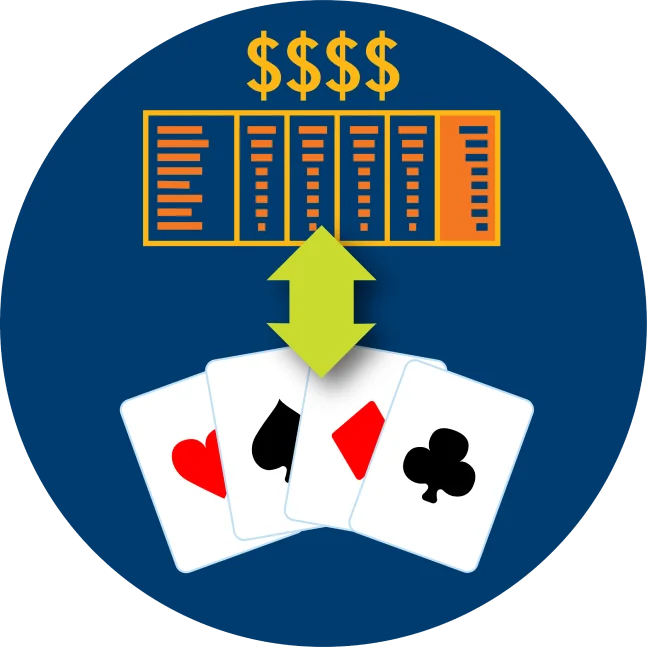
The side bet pays based on your seven-card hand alone — straights, flushes, full houses, and premium hands all pay fixed bonuses.
Envy bonuses pay other side-bet players at the table when someone hits a qualifying premium hand.
The side bet is resolved independently of the main Pai Gow Poker outcome; you win the bonus even if you lose the main hand.
The rules of Emperor's Challenging Pai Gow are identical to the Emperor's Challenge side bet. The main game proceeds as standard Pai Gow Poker: each player and the dealer receive seven cards from a 53-card deck (52 standard cards plus a semi-wild joker). You set a two-card low hand and a five-card high hand, with the five-card hand needing to outrank the two-card hand. To win the main bet, you must beat the dealer on both hands; lose both to lose; split results in a push (typically with a 5% commission on winning main bets). The Emperor's Challenging side bet is evaluated on the player's seven-card hand alone and pays regardless of the main game result. The standard paytable starts at a straight (2:1), flush (4:1 or 5:1), full house (varies, typically 5:1 to 20:1), four-of-a-kind (25:1 to 50:1), straight flush (50:1 to 150:1, with higher tiers for five-ace and seven-card straight flushes), and the top payout for a seven-card natural royal flush (usually 1,000:1 to 8,000:1 depending on the property). Envy bonuses are triggered when any player at the table makes a qualifying hand (usually four-of-a-kind or better), paying a fixed dollar amount to all other side-bet participants. The envy bonus amounts range from $5 for a four-of-a-kind to $100 or more for a seven-card straight flush.
No, they are the same game under slightly different naming or signage conventions. The rules, paytables, side bet mechanics, and envy bonus structures are identical. The 'Challenging' wording is likely a regional or property-specific variation of the standard Emperor's Challenge brand name. You can play either with the same expectations and strategy.
Use standard Pai Gow Poker setting strategy — the side bet does not change how you should set your hands.
Treat the side bet as a high-house-edge bonus wager; it adds volatility but does not improve your expected return on the main game.
Full tables improve the envy bonus value proposition — more players betting the side bet means more opportunities for envy payouts.
Bankroll management is especially important with any side bet that carries a 7-8% house edge; limit side wagers to a fraction of your buy-in.
There is no strategic advantage to altering your Pai Gow Poker hand-setting decisions based on the Emperor's Challenging side bet. The side bet is a purely passive wager that pays on the random distribution of your seven cards. Your optimal approach is to use the house way for setting hands and to treat the side bet as an entertainment expense. The house edge on the Emperor's Challenge family of side bets runs approximately 7-8%, which is material but lower than many carnival game side bets. The envy bonus mechanic meaningfully improves the overall value proposition when playing at a full table of six players — the more side bets in play, the higher the collective probability that someone hits an envy-qualifying hand on any given round. If the table offers a progressive structure (less common in Emperor's variants than in Fortune-branded games), monitor the jackpot level against the average hit point to decide whether the bet is worth making. In all cases, keep your side-bet spend proportionate to your bankroll and enjoy the bonus payouts when they come rather than expecting them to overcome the long-term house advantage.
The standard and far more common name for this side bet. Available at a larger number of casinos, the Emperor's Challenge uses the same Fortune-style paytable with fixed-odds bonuses and envy bonuses.
The most widespread Pai Gow side bet, Fortune Pai Gow uses a near-identical fixed-odds paytable (starting at a straight) with or without an optional progressive jackpot layer. If you cannot find Emperor's Challenge, Fortune is the closest substitute.
Fortune Pai Gow with an added progressive jackpot meter. The bonus paytable is the same as Emperor's Challenge, but a portion of each side bet feeds a growing jackpot rather than paying entirely fixed odds.
A Pai Gow variant where the dealer's cards are dealt face-up and the house way is fixed, reducing dealer error. Some Face-Up tables offer the Fortune or Emperor's Challenge side bet.
Emperor's Challenging Pai Gow is extremely rare, available at approximately 1 casino in the United States. The game may appear at a property that has chosen to brand its Emperor's Challenge variant with slightly different signage or terminology. Because this is effectively an alias for the standard Emperor's Challenge game, players looking for this experience may have better luck seeking out tables labeled simply Emperor's Challenge Pai Gow, Fortune Pai Gow, or generic Pai Gow Poker with a bonus side bet. Use our US casino directory to browse Pai Gow Poker offerings at casinos near you, and call ahead to confirm which specific side-bet variants are currently running. If you are a fan of the Pai Gow side-bet experience and want the social energy that envy bonuses bring to the table, the broader Emperor's Challenge and Fortune Pai Gow variants — which are far more widely available — will provide an identical gameplay experience.
An envy bonus is a payout you receive when another player at the table — not you — makes a qualifying premium hand and you have placed the side bet. For example, if the player next to you makes a four-of-a-kind, you might collect a $5 envy bonus. The envy amounts scale with the hand: higher-value premium hands like straight flushes and seven-card royals trigger larger envy payouts. Envy bonuses require that you have placed the side bet on that specific hand to qualify.